


Top 5 Ontario Destinations for 2026
📸 Top 5 Ontario Destinations for 2026
Ontario stands out as one of Canada’s most diverse provinces, offering an incredible mix of natural wonders, vibrant cities, and relaxing countryside escapes. Whether you crave the rush of Niagara Falls, the cosmopolitan energy of Toronto, or the peaceful serenity of Prince Edward County, Ontario delivers experiences for every type of traveler.
With tourism booming across Canada and exciting new attractions emerging, 2026 is the perfect year to plan your Ontario getaway. This guide explores the top 5 Ontario destinations for 2026, complete with seasonal travel tips, insider gems, food highlights, and suggested itineraries to help you make the most of your trip.
1. Niagara Falls – A Timeless Icon
Few destinations are as legendary as Niagara Falls. The roar of the cascading Horseshoe Falls, paired with mist rising into the sky, makes this a bucket-list stop for travelers worldwide.
- Take a Niagara City Cruise boat tour to experience the Falls up close.
- Explore the Journey Behind the Falls tunnels for a thrilling view from below.
- Stroll along Clifton Hill for entertainment, arcades, and lively nightlife.
- Visit nearby Niagara-on-the-Lake for wineries, theatre, and historic charm.
- Spring: See the gardens bloom in Queen Victoria Park.
- Summer: Expect crowds—plan early morning or evening visits.
- Fall: Niagara’s wine harvest season is a must for wine lovers.
- Winter: Don’t miss the Winter Festival of Lights.
Google Map:
2. Toronto – Canada’s Global City

As Ontario’s capital, Toronto offers world-class culture, dining, and entertainment. Known for its diversity, the city invites visitors to explore its neighborhoods, arts, and food from around the globe.
- Climb the CN Tower or try the EdgeWalk.
- Explore the Royal Ontario Museum and Art Gallery of Ontario.
- Wander Kensington Market and Queen Street West for food and shopping.
- Catch a show at the Toronto International Film Festival or Mirvish Theatre.
- Toronto’s culinary scene shines in 2026 with Michelin-recognized restaurants like Alo.
- Sample authentic global cuisines in Little Italy, Greektown, or Chinatown.
- Visit St. Lawrence Market for artisanal foods and local delicacies.
- Therme Canada at Ontario Place: A $350-million all-season wellness resort redefining Toronto’s waterfront.
Google Map:
3. Ottawa – Canada’s Capital

Ottawa blends history, culture, and scenic waterways. As the nation’s capital, it offers museums, festivals, and beautiful government architecture.
- Visit Parliament Hill and watch the Changing of the Guard.
- Explore the National Gallery of Canada and Canadian Museum of History.
- Walk or cycle along the Rideau Canal, a UNESCO World Heritage Site.
- Visit ByWard Market for food, local art, and crafts.
- Spring: Tulip Festival blooms throughout the city.
- Summer: Outdoor concerts and festivals along the canal.
- Fall: Hiking and bike trails with fall foliage.
- Winter: Ice skating on the Rideau Canal, the world’s largest naturally frozen skating rink.
- Check out the Dows Lake Pavilion for canoeing, paddleboarding, and seasonal festivals.
Google Map:
4. Kingston – The Limestone City

Kingston combines history, waterfront beauty, and a growing culinary scene. It’s often called the “Limestone City” for its historic buildings.
- Tour Fort Henry, a UNESCO World Heritage Site.
- Cruise the 1000 Islands on scenic boat tours.
- Explore Queen’s University campus and local boutiques.
- Visit Kingston Penitentiary for historic guided tours.
- Kingston has a booming restaurant and café scene.
- Try waterfront dining with views of Lake Ontario.
- Annual food and wine festivals are expanding in 2026.
- Spring: Historic walking tours and early waterfront strolls.
- Summer: Perfect for island cruises and festivals.
- Fall: Wine and harvest festivals at local vineyards.
- Winter: Cozy cafés and historic museum tours.
Google Map:
5. Wasaga Beach – Ontario’s Longest Freshwater Beach

Wasaga Beach boasts 14 kilometers of soft sand along Nottawasaga Bay, making it the world’s longest freshwater beach. It’s perfect for sunbathing, swimming, and watersports.
- Relax along the sandy shoreline and enjoy the warm waters of Lake Huron.
- Try paddleboarding, kayaking, or jet-skiing.
- Walk or cycle the Wasaga Beach Boardwalk.
- Explore nearby trails at the Wasaga Beach Provincial Park and Blue Mountain area.
- Enjoy local cafés, ice cream stands, and beachside pubs.
- Waterfront dining with sunset views is a must in summer.
- Summer: Peak beach season, ideal for swimming and water sports.
- Spring/Fall: Quiet walks and scenic photography.
- Winter: Snowshoeing and frozen lake views, off-peak but peaceful.
Google Map:
Final Thoughts
From Niagara Falls’ natural power to Ottawa and Kingston’s historic charm and Prince Edward County’s relaxing beaches, Ontario has something for every traveler. These top 5 Ontario destinations for 2026 combine urban culture, history, culinary experiences, and scenic escapes.
Adding seasonal travel tips, insider gems, suggested itineraries, and interactive maps makes your planning easy and engaging.
Ready to explore Ontario in 2026? Start planning today and discover why this province continues to be one of Canada’s most unforgettable destinations.


How Can Diabetics Manage Blood Sugar on Long-Haul Flights?
💉 How Can Diabetics Manage Blood Sugar on Long-Haul Flights?
Long-haul flights can be challenging for people with diabetes. Extended sitting, disrupted sleep, and changes in meal timing can all affect blood sugar control. With the right preparation and strategies, you can enjoy your journey while keeping your health on track. In this guide, we’ll explore how to manage diabetes effectively when flying across time zones—along with real-life examples.
Pre-Flight To-Do List
Before heading to the airport, here’s a simple checklist to help you stay prepared:
- Consult your doctor about adjusting insulin or medication schedules
- Get a doctor’s note for carrying supplies through airport security
- Pack twice the amount of insulin, test strips, and medication you’ll need
- Store supplies in carry-on luggage, not checked bags
- Bring healthy snacks (nuts, protein bars, cheese, fruit)
- Charge and pack devices like CGM or glucose meter
- Download travel apps to track time zones and medications
- Check travel insurance coverage for medical support abroad
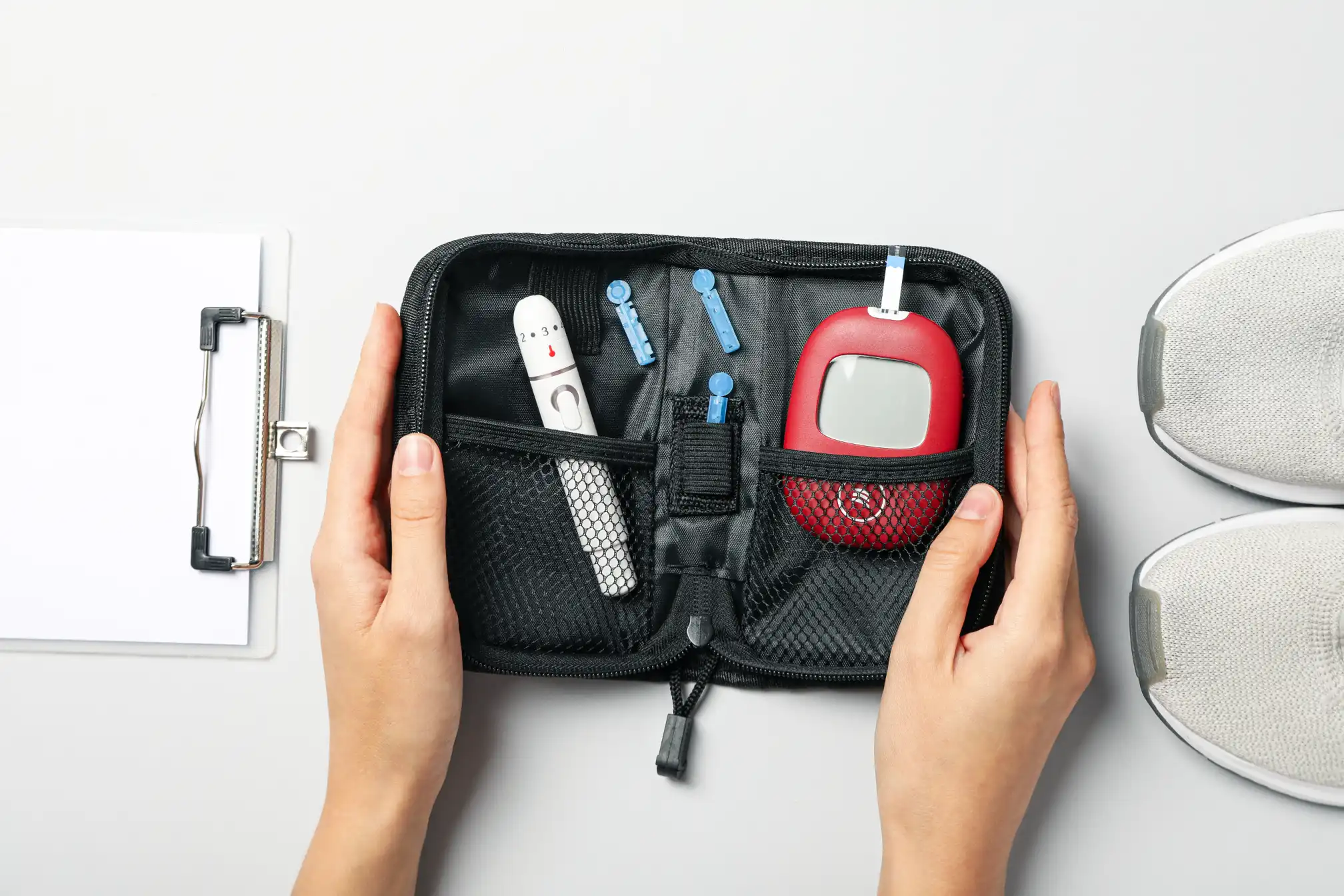
Pre-Flight Preparation
- Pack essential supplies: insulin, glucose meter, testing strips, snacks, and a doctor’s note.
- Keep medication in your carry-on to avoid temperature changes in checked luggage.
- Adjust insulin and medication schedules in consultation with your doctor before flying.
- Carry extra supplies in case of delays.
Case Example:
Maria, a type 1 diabetic from Toronto, was traveling to Europe for two weeks. She packed double the supplies she thought she needed, including insulin pens, test strips, and snacks. When her connecting flight was unexpectedly canceled, she had enough medication on hand to stay safe until she reached her destination.

Eating and Drinking During the Flight
- Choose balanced meals with controlled carbs when offered by the airline.
- Bring your own diabetic-friendly snacks like nuts, cheese, or protein bars.
- Stay hydrated with water instead of sugary drinks or alcohol.
- Avoid overeating to reduce spikes and crashes.
Case Example:
James, living with type 2 diabetes, flew from New York to Tokyo (a 14-hour flight). Instead of relying on airline meals, he brought pre-portioned nuts and protein bars. This helped him maintain stable glucose levels while others around him complained about bloating and fatigue from heavy in-flight food.

Blood Sugar Monitoring in the Air
- Test blood sugar regularly, especially before meals and rest periods.
- Use a Continuous Glucose Monitor (CGM) if available.
- Note how different meal times and inactivity affect your readings.
Case Example:
Lina used a CGM during her long-haul trip from London to Singapore. She checked her readings every few hours and noticed her glucose levels tended to rise after long periods of sitting. By catching these spikes early, she was able to take a short walk and keep her levels under control.
Staying Active on Long Flights
- Take short walks every 1–2 hours when possible.
- Do simple seated exercises like ankle circles or leg lifts.
- Movement improves circulation and helps regulate blood sugar.
Case Example:
David, a frequent business traveler, makes it a routine to walk to the restroom every two hours—even when he doesn’t need it. On a flight to Sydney, he also did seated stretches. His blood sugar remained much more stable compared to trips where he sat still the entire time.

Adjusting to New Time Zones
- Gradually adapt your insulin or medication schedule.
- Track time differences in a travel diary or app.
- Discuss adjustments with your healthcare provider before your trip.
Case Example:
Priya was worried about her 10-hour time difference flying from India to the US. Before her trip, her doctor suggested gradually adjusting her insulin injection times by one hour per day. By the time she landed, her schedule was already in sync, preventing dangerous fluctuations.
Final Thoughts
Managing diabetes on long-haul flights doesn’t have to be stressful. With smart preparation, careful meal planning, and regular monitoring, you can travel with confidence and comfort. Always consult your doctor before making adjustments to your medication or insulin schedule, and enjoy your journey knowing you’re in control.