

💉 How Can Diabetics Manage Blood Sugar on Long-Haul Flights?
Long-haul flights can be challenging for people with diabetes. Extended sitting, disrupted sleep, and changes in meal timing can all affect blood sugar control. With the right preparation and strategies, you can enjoy your journey while keeping your health on track. In this guide, we’ll explore how to manage diabetes effectively when flying across time zones—along with real-life examples.
Pre-Flight To-Do List
Before heading to the airport, here’s a simple checklist to help you stay prepared:
- Consult your doctor about adjusting insulin or medication schedules
- Get a doctor’s note for carrying supplies through airport security
- Pack twice the amount of insulin, test strips, and medication you’ll need
- Store supplies in carry-on luggage, not checked bags
- Bring healthy snacks (nuts, protein bars, cheese, fruit)
- Charge and pack devices like CGM or glucose meter
- Download travel apps to track time zones and medications
- Check travel insurance coverage for medical support abroad
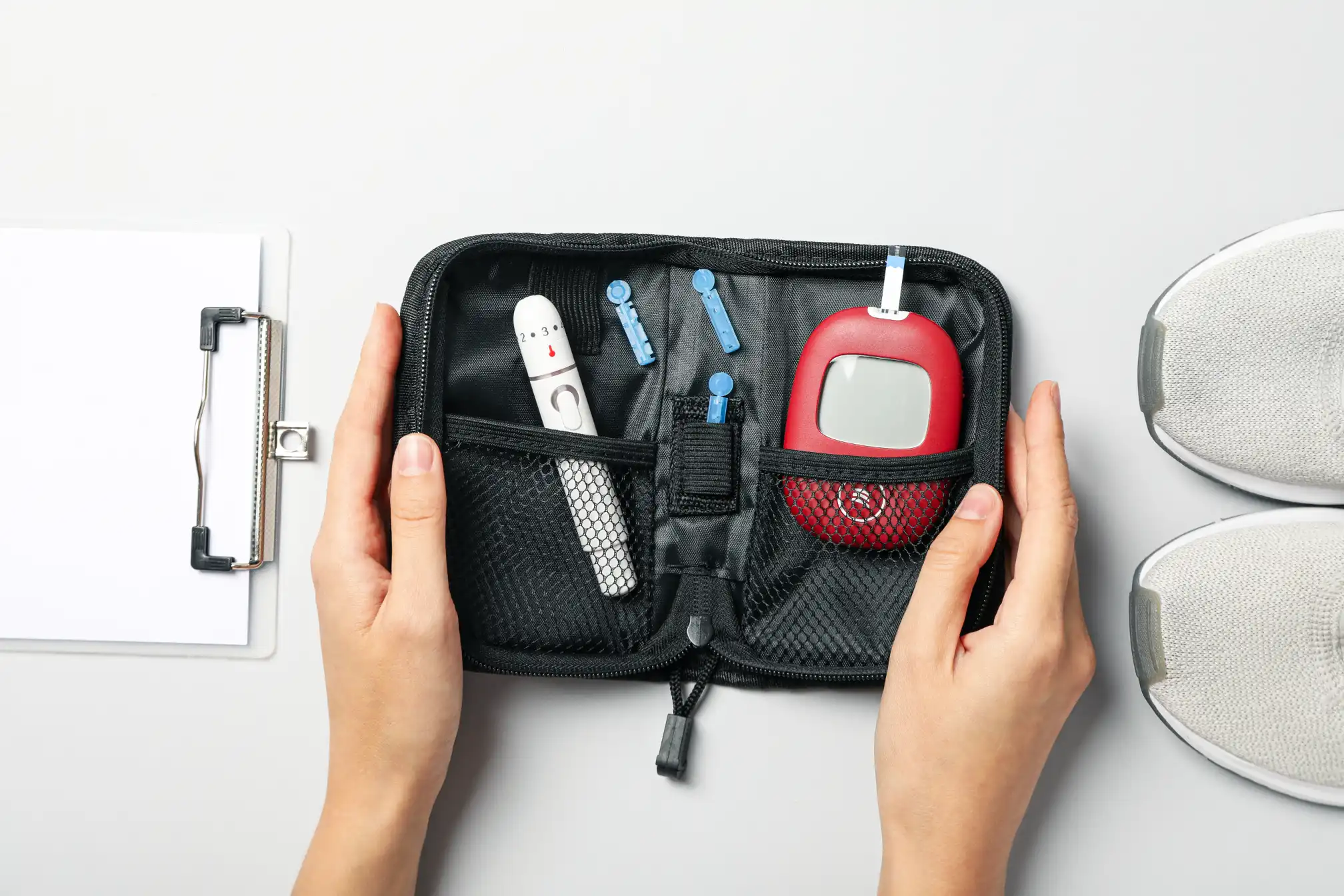
Pre-Flight Preparation
- Pack essential supplies: insulin, glucose meter, testing strips, snacks, and a doctor’s note.
- Keep medication in your carry-on to avoid temperature changes in checked luggage.
- Adjust insulin and medication schedules in consultation with your doctor before flying.
- Carry extra supplies in case of delays.
Case Example:
Maria, a type 1 diabetic from Toronto, was traveling to Europe for two weeks. She packed double the supplies she thought she needed, including insulin pens, test strips, and snacks. When her connecting flight was unexpectedly canceled, she had enough medication on hand to stay safe until she reached her destination.

Eating and Drinking During the Flight
- Choose balanced meals with controlled carbs when offered by the airline.
- Bring your own diabetic-friendly snacks like nuts, cheese, or protein bars.
- Stay hydrated with water instead of sugary drinks or alcohol.
- Avoid overeating to reduce spikes and crashes.
Case Example:
James, living with type 2 diabetes, flew from New York to Tokyo (a 14-hour flight). Instead of relying on airline meals, he brought pre-portioned nuts and protein bars. This helped him maintain stable glucose levels while others around him complained about bloating and fatigue from heavy in-flight food.

Blood Sugar Monitoring in the Air
- Test blood sugar regularly, especially before meals and rest periods.
- Use a Continuous Glucose Monitor (CGM) if available.
- Note how different meal times and inactivity affect your readings.
Case Example:
Lina used a CGM during her long-haul trip from London to Singapore. She checked her readings every few hours and noticed her glucose levels tended to rise after long periods of sitting. By catching these spikes early, she was able to take a short walk and keep her levels under control.
Staying Active on Long Flights
- Take short walks every 1–2 hours when possible.
- Do simple seated exercises like ankle circles or leg lifts.
- Movement improves circulation and helps regulate blood sugar.
Case Example:
David, a frequent business traveler, makes it a routine to walk to the restroom every two hours—even when he doesn’t need it. On a flight to Sydney, he also did seated stretches. His blood sugar remained much more stable compared to trips where he sat still the entire time.

Adjusting to New Time Zones
- Gradually adapt your insulin or medication schedule.
- Track time differences in a travel diary or app.
- Discuss adjustments with your healthcare provider before your trip.
Case Example:
Priya was worried about her 10-hour time difference flying from India to the US. Before her trip, her doctor suggested gradually adjusting her insulin injection times by one hour per day. By the time she landed, her schedule was already in sync, preventing dangerous fluctuations.
Final Thoughts
Managing diabetes on long-haul flights doesn’t have to be stressful. With smart preparation, careful meal planning, and regular monitoring, you can travel with confidence and comfort. Always consult your doctor before making adjustments to your medication or insulin schedule, and enjoy your journey knowing you’re in control.
More Helpful Guides

Secrets Airlines Don’t Want You to Know
Discover the airline secrets that can save you money, comfort, and time when you travel. Learn what airlines don’t want…

Top 5 Ontario Destinations for 2026
Explore the top 5 Ontario destinations for 2026, from roaring waterfalls and urban adventures to charming wineries and…

Top 5 Luggage Brands You Can Trust
Discover the top 5 luggage brands with pros, cons, and a handy comparison chart to help you choose the best travel…

20 Travel Hacks to Survive Long Flights
Discover 20 practical travel hacks and tips to stay comfortable, entertained, and stress-free during long flights.

Plan Trips Free with AI Chat Tools Step by Step
Use free AI chat tools to plan smarter trips—itineraries, budgets, bookings, and checklists—in minutes.

Think You Can Bring It? 🇭🇰 Hong Kong’s 2025 Restrictions!
Avoid fines and confiscation—check Hong Kong’s 2025 restricted items before you travel or ship.
What You Can’t Bring to 🇨🇦 Canada in 2025
Learn what items are restricted or prohibited when entering Canada in 2025, and avoid fines or confiscations with this…